Hydro Testing Pipelines: A Safety Guide for Engineering and Construction Teams
In the construction of pipelines for oil, gas, and industrial water distribution, the final phase—Hydro Testing—is the most critical. It is the definitive test that confirms a system can withstand its designed operating pressure without leaks, weaknesses, or structural deformation.
However, hydro testing is also a high-risk operation. Improper procedures or under-specced equipment can lead to catastrophic pipe bursts, endangering onsite personnel and causing significant project delays. As an Ahmedabad-based manufacturer, Amjet Pressure Systems works with engineering teams to provide robust, reliable solutions for these high-stakes environments.
Why Professional Hydro Testing is Non-Negotiable
Hydro testing is more than just a regulatory checklist item. It is a vital assurance of quality control. Whether you are dealing with new steel pipelines or verifying the integrity of repaired sections, the process involves filling the pipeline with water and pressurizing it to a level well above the operating pressure.
The Dangers of Using "Entry-Level" Equipment
Many project sites make the mistake of using standard industrial pumps for hydro testing. This is a significant error. Hydro testing requires:
Precise Pressure Control: The ability to ramp up pressure steadily without dangerous “surges.”
Leak Detection Sensitivity: A system that can maintain a static pressure without fluctuation over the duration of the test.
High-End Durability: The equipment must handle long, continuous run-times while maintaining high pressure.
Essential Best Practices for Your Hydro Test
To ensure a safe and successful test, your engineering team should adhere to these core principles:
1. Proper Air Removal (Venting)
The most common cause of a failed hydro test is trapped air. Air is compressible; if it remains in the pipe, the pressure readings will be erratic, and it can cause a dangerous explosion-like reaction if the pipe fails. Always ensure your highest points are properly vented before bringing the system to pressure.
2. Gradual Pressurization
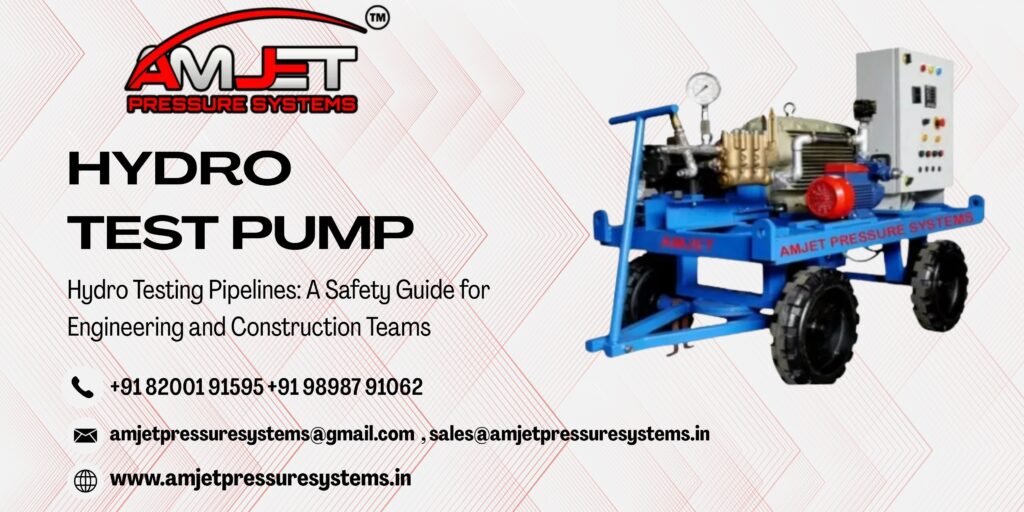
Avoid rapid pressure spikes. Use a Hydro Test Pump that offers refined control, allowing you to monitor the pressure increments steadily. This prevents “water hammer” effects that can weaken joints and welds.
3. Equipment Calibration
Your pressure gauge is only as good as its last calibration. Always use an Amjet-grade high-precision gauge and ensure your Triplex Plunger Pump is checked for seal integrity before starting the test. A leaking pump will prevent the system from reaching its target pressure.
Why Engineers Choose Amjet for Pipeline Projects
We design our Hydro Test Pumps with the specific needs of pipeline contractors in mind:
Engineered for Reliability: Our pumps are built to maintain precise pressure levels, ensuring that your test data is accurate and verifiable.
Portability for Site Work: Construction environments are rugged. Our systems are built to be transported easily to site, whether you are working on a remote pipeline or a city-based distribution network.
Premium Build Quality: With Italian-made components, our systems offer the “luxury” level of performance and durability that prevents equipment failure in the middle of a critical testing phase.
Ensure Your Next Project Passes with Flying Colors
Don’t gamble with your project’s integrity. Investing in professional-grade testing equipment is an investment in safety, compliance, and your reputation as a high-quality contractor.
Need the Right Tool for the Job? Explore our dedicated range of Hydro Test Pumps designed for industrial and construction applications.
Need Technical Support? Our engineering team can help you select the right pump size based on your pipe diameter, length, and required test pressure. Get in touch with us for a consultation.
View Our Full Range: See how our equipment supports Construction Industry projects across India. Browse our products here.