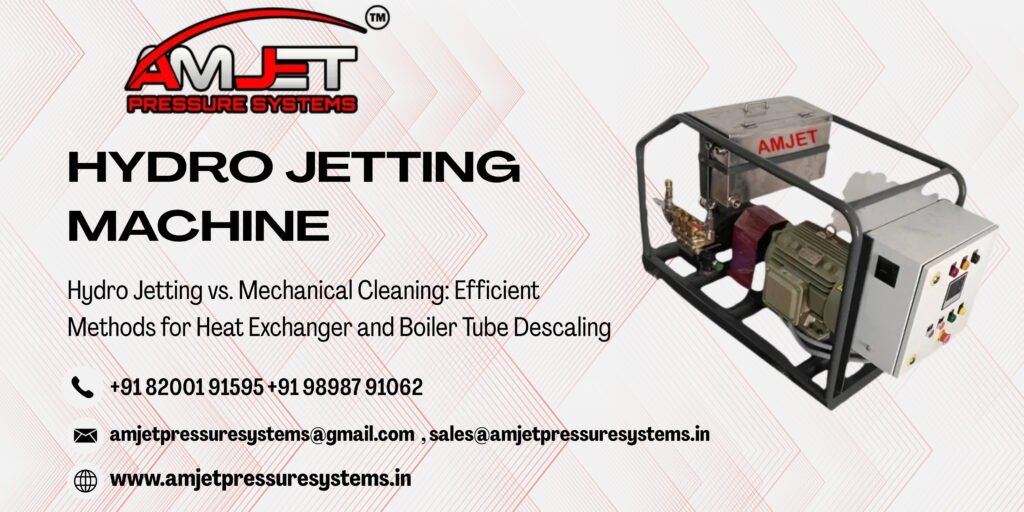
Hydro Jetting vs. Mechanical Cleaning: Efficient Methods for Heat Exchanger and Boiler Tube Descaling
Industrial heat exchangers, condensers, and process boilers are the thermal heart of manufacturing plants, chemical refineries, and power generation facilities. Over extended operating cycles, continuous fluid transfer causes hard mineral scaling, silica deposits, carbonized sludge, and bio-fouling on interior and exterior tube surfaces.
Left unaddressed, even a fraction of a millimeter of internal scale acts as a thermal insulator. This reduces overall heat transfer coefficients, forces boiler burners to work harder, raises fuel consumption, and risks localized overheating and tube failure.
When plant maintenance managers plan turnarounds and seasonal shutdowns, selecting the correct tube descaling method is critical. The two primary methods used across processing industries are mechanical cleaning (wire brushing, drilling, and rotary cutters) and high-pressure hydro jetting.
Understanding Mechanical Tube Cleaning Methods
Mechanical cleaning utilizes physical contact to scrape, drill, or brush away scale build-up inside metal tubes.
+-----------------------------------------------------------------------+
|                       MECHANICAL TUBE CLEANING                        |
|                                                                       |
|   +--------------------+     +-------------------+     +----------+   |
|   | Flexible Drive Shaft| --> | Rotary Cutting Head| --> | Internal |   |
|   | or Rigid Drill Rod |     | or Wire Brush     |     | Tube Wall|   |
|   +--------------------+     +-------------------+     +----------+   |
|                                                                       |
+-----------------------------------------------------------------------+
How It Works
A flexible shaft or rigid drill rod powered by an electric, pneumatic, or hydraulic motor is fed through individual exchanger tubes. At the tip, specialized attachments—such as wire brushes, carbide-tipped drill bits, or expanding scraper blades—rotate at high speeds to scrub off stubborn scale. Water flushing is typically introduced concurrently to wash away loosened debris.
Advantages
Effective on Completely Plugged Tubes: When tubes are 100% blinded with hard, solid deposits, mechanical drill bits provide the physical force necessary to bore an initial relief hole.
Lower Initial Equipment Cost: Basic rotary cleaning setups require less initial capital investment compared to high-pressure pump skids.
Drawbacks & Operational Risks
Base Metal Abrasion: Repeated mechanical scraping carries an inherent risk of scoring or thinning internal tube walls, leading to micro-scratches that accelerate future fouling and cause early fatigue.
Limited Geometry: Rigid or semi-flexible shaft drives struggle with U-bend heat exchanger configurations, often leaving curved sections uncleaned.
High Labor Intensity: Manual shaft feeding through hundreds or thousands of tubes increases maintenance hours during plant turnarounds.
Understanding High-Pressure Hydro Jetting Systems
High-pressure water jetting relies solely on concentrated kinetic energy—using high-velocity water streams delivered through targeted nozzle configurations—to blast away scale down to parent metal without mechanical friction.
+-----------------------------------------------------------------------+
|                      HIGH-PRESSURE HYDRO JETTING                      |
|                                                                       |
|   +---------------------+     +------------------+     +----------+   |
|   | Triplex High Pressure| --> | Flexible High    | --> | Nozzle   |   |
|   | Plunger Pump Skid   |     | Pressure Lance   |     | Jets     |   |
|   +---------------------+     +------------------+     +----------+   |
|                                                                       |
+-----------------------------------------------------------------------+
How It Works
A specialized, heavy-duty industrial water jetting system pressurizes filtered water anywhere from 350 Bar to over 1000 Bar (5,000 PSI to 15,000+ PSI). High-pressure flexible lances equipped with multi-directional nozzles (featuring backward-facing propulsion jets and forward-striking cutting jets) are inserted into the tubes. The hydraulic pressure shearing force strips away hard silica, calcium carbonate, and baked-on carbon without touching the metal substrate.
Advantages
Zero Substrate Damage: Water jetting removes 100% of scale while leaving the original tube surface smooth and unharmed, preventing premature wall thinning.
360-Degree Total Cleaning: Rotating nozzle heads ensure complete circumference descaling, including pitted areas and tube pits that rigid brushes miss.
U-Bend Accessibility: High-pressure flexible lances negotiate complex U-bend heat exchanger geometries effortlessly.
Speed and Efficiency: Higher flow rates (LPM) paired with adequate pressure clear tube bundles in a fraction of the time required by manual scraping.
Operational Considerations
High-Pressure Safety Precautions: Operating high-pressure equipment demands strict adherence to safety protocols, including hose whip checks, foot control valves, and trained operators equipped with proper high-pressure protective gear.
When to Choose Hydro Jetting for Boiler and Exchanger Maintenance
While mechanical reamers still have a role in breaking open completely solid, concrete-like tube blockages, high-pressure water jetting is the industry standard for plant maintenance due to speed, safety, and equipment longevity.
1. Descaling Chemical and Refractory Deposits
When heat exchanger tubes are lined with sticky resins, polymer residues, or tough silica scale, mechanical brushes often glaze over the material. High-pressure water penetrates beneath the deposit layer, peeling it away in large chunks.
2. Protecting Expensive Alloy Tubes
Titanium, brass, and thin-walled stainless steel tubes are expensive to retube. Using mechanical cutters risks gouging the tube walls. A dedicated hydro jetting machine allows plant engineers to clean delicate tubes thoroughly without compromising wall thickness or pressure ratings.
3. Streamlining Plant Turnarounds
During major plant turnarounds, every hour of extended downtime impacts production revenue. Water jetting units fitted with multi-lance setups allow technicians to clear multiple tube runs simultaneously, getting boilers and exchangers back online faster.
Sizing the Right Water Jetting System for Your Plant
Selecting the right water jetting equipment requires balancing operating pressure (Bar/PSI) and water flow rate (LPM):
Light Sludge & Soft Organic Fouling: 250 to 350 Bar with higher flow rates (30–50 LPM) to flush out soft deposits quickly.
Hard Calcium Carbonate & Chemical Scale: 500 to 750 Bar utilizing backward-propelling self-rotating nozzles for deep descaling.
Extremely Hard Silica & Baked Carbon: 1000+ Bar using focused, ultra-high-pressure jetting attachments.
To ensure long-term reliability during multi-shift cleaning operations, your water jetting skid must be powered by a heavy-duty continuous-duty plunger pump capable of maintaining steady system pressure without overheating.
Summary & Next Steps for Plant Maintenance
Choosing between hydro jetting and mechanical cleaning comes down to balancing turnaround speed with equipment protection. While mechanical cleaning can unblock totally choked tubes, high-pressure water jetting delivers a safer, faster, and more thorough clean that preserves tube wall integrity and restores thermal efficiency.
Is your facility preparing for an upcoming boiler or heat exchanger maintenance shutdown?
Explore custom-engineered water jetting solutions and continuous-duty pump configurations by consulting with our engineering team at Amjet Pressure Systems to find the right pressure, flow, and nozzle package for your plant operations.