
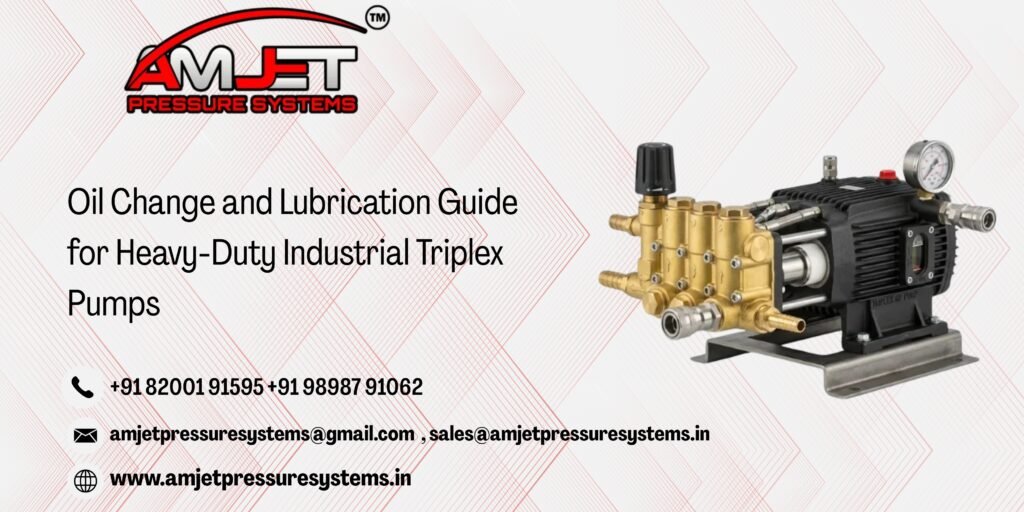
Oil Change and Lubrication Guide for Heavy-Duty Industrial Triplex Pumps
In any heavy-duty industrial facility, equipment reliability is directly tied to routine maintenance practices. While plant managers often focus heavily on high-pressure seals, nozzles, and water filtration, the internal mechanical heart of the machine—the power end—frequently gets overlooked. At the core of every high-performance Triplex Plunger Pump, a complex system of crankshafts, connecting rods, and wrist pins converts rotational motor energy into smooth, high-pressure linear motion.
Protecting these high-stress moving metal parts requires strict adherence to a proper lubrication schedule. Using the wrong oil or neglecting scheduled oil changes can lead to overheating, metal scoring, and catastrophic mechanical failure. Understanding how to properly service and lubricate your pump’s crankcase is essential for maximizing operational longevity and minimizing costly downtime.
Understanding the Power End vs. Fluid End Lubrication
To properly maintain a triplex reciprocating pump, it helps to understand its two distinct operational zones:
The Fluid End: This is where the water or liquid is handled. It relies on the pumped fluid itself (along with the ceramic plungers and packing seals) for cooling and minor lubrication. No oil is used here.
The Power End (Crankcase): This is the mechanical housing containing the crankshaft, bearings, and connecting rods. This entire assembly operates entirely submerged in or heavily splashed by specialized lubricating oil.
Because the power end handles continuous mechanical friction and heavy load pressures from the plungers, maintaining the purity and viscosity of the crankcase oil is critical.
Why Triplex Pump Oil Degrades Over Time
Unlike automotive engines that feature advanced oil filtration and cooling systems, many industrial triplex pumps rely on a closed crankcase reservoir without an external oil filter. Over hundreds of operational hours, the oil degrades due to specific environmental and mechanical factors:
Thermal Breakdown: Constant high-speed mechanical agitation generates continuous heat, breaking down the molecular chains of inferior lubricants and reducing their film strength.
Moisture Contamination: Ambient humidity and temperature fluctuations inside the plant can cause condensation to form inside the crankcase. If moisture mixes with the oil, it creates a milky emulsion that strips away protective lubrication properties, leading to rapid bearing rust and metal pitting.
Mechanical Shear: The intense sliding pressure between the connecting rods and crankshaft puts extreme shear stress on the oil, thinning its viscosity over time.
Step-by-Step Triplex Pump Oil Change Procedure
Executing a clean, efficient oil change ensures your pump’s power end stays protected. Follow these standard industrial steps during scheduled maintenance windows:
Step 1: Run and Warm the Pump: Run the pump for 5 to 10 minutes prior to the oil change. Warm oil flows more freely and carries suspended microscopic wear particles out of the reservoir more effectively.
Step 2: Drain the Old Oil: Place a catch basin beneath the crankcase drain plug. Remove the plug completely and allow all the used oil to drain out. Inspect the drained oil for a milky appearance (indicating water contamination) or metallic flakes (indicating abnormal internal wear).
Step 3: Flush the Crankcase (If Necessary): If heavy contamination or sludge is present, flush the crankcase with a designated flushing oil or light cleaning fluid before sealing the drain plug.
Step 4: Refill with Specified Lubricant: Reinstall the drain plug securely. Fill the crankcase slowly through the top fill port or gauge window using the manufacturer’s recommended high-grade synthetic industrial pump oil (typically a non-detergent ISO 68 or 100 grade oil, depending on operating temperatures). Stop filling exactly at the center of the sight glass. Overfilling can cause excessive internal pressure and seal blowouts.
Recommended Maintenance Schedule
To keep your equipment running smoothly, adhere to this standard maintenance timeline:
Initial Break-In Change: Replace the oil after the first 50 operating hours on a brand-new pump to flush out any microscopic manufacturing metal burrs.
Routine Operational Changes: Thereafter, replace the crankcase oil every 500 operating hours or at least every 6 months, whichever comes first.
Visual Checks: Inspect the oil sight glass daily before starting operations to verify oil level and clarity.
Conclusion
Routine lubrication management is a small investment of time that prevents massive repair bills. By keeping your pump’s power end clean and properly lubricated, you ensure smooth, uninterrupted mechanical performance.
Explore our heavy-duty, engineered-to-last Triplex Plunger Pumps built to deliver reliable performance and low maintenance requirements across demanding industrial applications.